
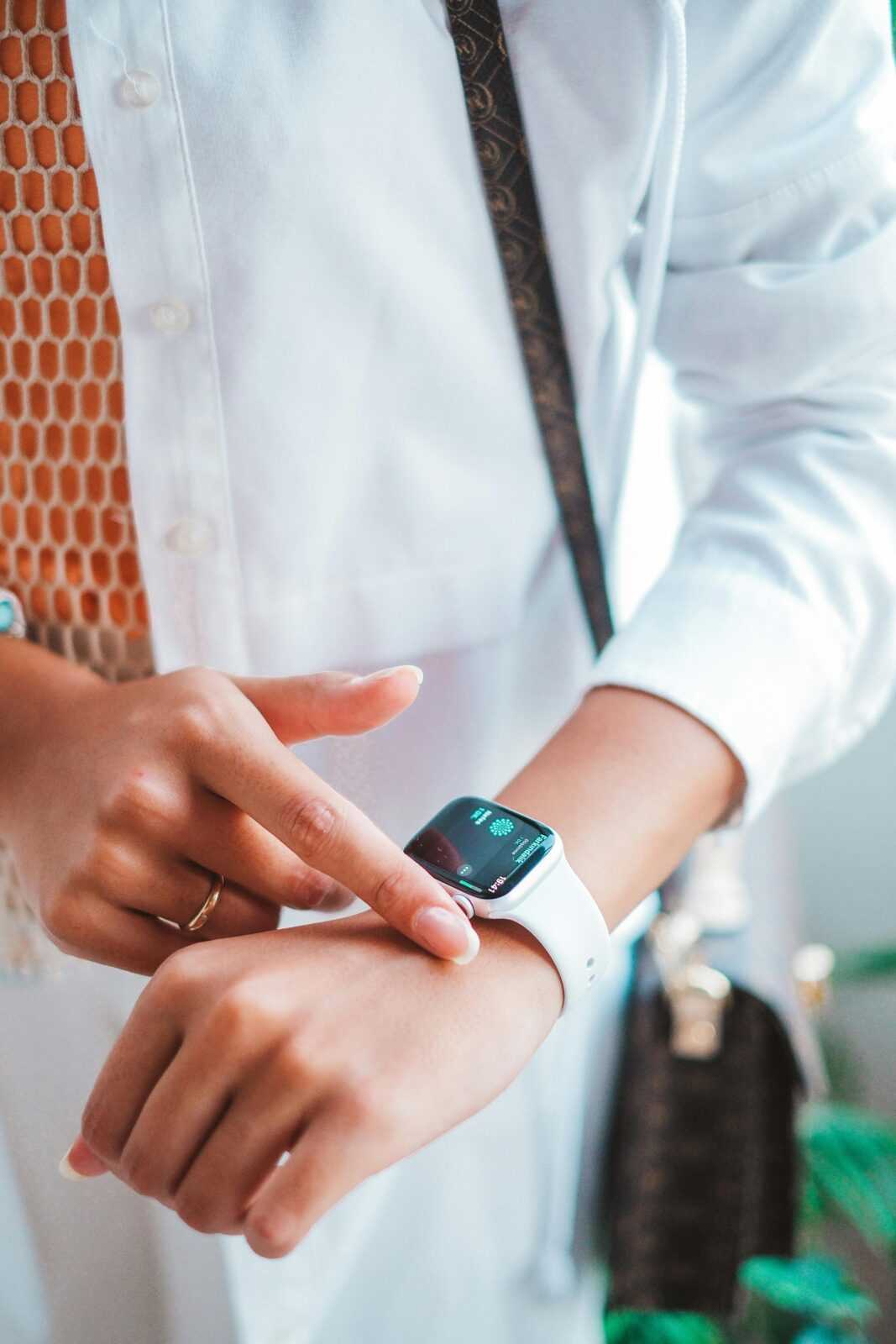
Wearables have moved from step counters into biometric systems that interpret real-time physiological data. Devices like Apple Watch, Oura Ring, WHOOP and glucose monitors collect dense inputs on heart rate variability, temperature, respiration and sleep, feeding AI models that generate recovery, stress and behavior insights.
Last year, over 450 million people worldwide used smartwatches to track health metrics, with adoption continuing to expand as devices shift toward continuous monitoring and predictive analytics. In 2026, machine learning focuses on individual baselines, detecting subtle shifts in signals that can indicate illness early and turning the body into a continuous data stream for predictive forecasting systems.
The crossover between health data and probabilistic digital systems
Wearable analytics increasingly operate within the same structural logic found in other real-time probabilistic systems, where continuous inputs are processed to estimate future states under uncertainty. The same architecture appears in financial forecasting tools, logistics optimization engines and live decision circumstances that depend on rapidly updating probability models. In digital wagering ecosystems such as scommesse online, odds are continuously recalculated as new data enters the system, reflecting shifts in probability. The similarity is in computational design: streaming inputs, dynamic weighting and outcome prediction under uncertainty.
Wearables sit comfortably within this broader computational terrain. Your sleep score, recovery index or glucose response curve is not fundamentally different in structure from a probability model estimating future outcomes based on past signals; both depend on continuous calibration, feedback loops and deviations from expected baselines. The difference lies in the domain, where health data becomes another instantiation of predictive modelling applied to a highly personal system: the human body.
Continuous monitoring and the normalization of feedback loops
Modern wearables establish uninterrupted feedback loops between physiology and interpretation layers. Devices such as the Oura Ring 4 and WHOOP 5.0 continuously evaluate overnight recovery, stress load and cardiovascular variability, translating these metrics into daily readiness recommendations. Continuous glucose monitors extend this paradigm further, offering minute-by-minute metabolic feedback tied to food intake and activity levels.
Recent 2026 evaluations of wearable ecosystems highlight that users now interact less with raw data and more with synthesized recommendations. The interface has moved from charts to summaries, where AI-generated insights compress complex physiological variation into simple decision signals. This reduces cognitive load but increases reliance on algorithmic interpretation. The system begins to function as an external decision partner, offering guidance on training intensity, sleep timing or dietary adjustments based on inferred biological state.
This constant feedback environment encourages behavioral adaptation. You adjust exercise intensity, meal composition and sleep habits in response to short-cycle biometric updates. Over time, your body is treated like a responsive dataset continuously re-evaluated through sensor input.
AI interpretation layers and the question of signal fidelity
The introduction of AI-driven interpretation has improved accessibility but introduced new complexities around accuracy and meaning. Composite scores like “readiness” or “recovery” aggregate multiple physiological inputs into single numerical outputs. While useful for simplification, these scores compress uncertainty into a format that appears more precise than it actually is.
Recent wearable analyses show that small score fluctuations often fall within statistical noise ranges of underlying sensors. HRV variability, for example, can shift naturally based on hydration, sleep timing or measurement conditions, yet AI systems may interpret minor changes as meaningful trends. This creates a perception of precision that exceeds the actual reliability of the inputs.
At the same time, AI systems excel in pattern recognition over time. Longitudinal deviations, such as sustained changes in resting heart rate or glucose response, carry stronger informational value than isolated daily readings. The challenge lies in distinguishing meaningful signal drift from short-term physiological variance. This distinction determines whether the system functions as a useful predictive tool or a source of unnecessary behavioral correction.
Toward integrated predictive ecosystems across industries
Wearables now operate as entry points into broader predictive ecosystems that extend beyond health. The same structural logic used in biometric forecasting applies to logistics systems, financial modelling and real-time decision engines across digital platforms. What connects these domains is the use of continuous input streams to estimate future states under uncertainty.
In healthcare contexts, this manifests as early illness detection, metabolic trend analysis and recovery optimization. In adjacent digital domains, similar architectures guide probabilistic decision-making in environments where outcomes are uncertain but data-rich. The convergence lies in computation rather than content: whether analyzing glucose variability or probabilistic outcomes in other systems, the underlying mechanism is identical.
As wearable adoption expands, personal data becomes part of a larger predictive infrastructure that connects physiology, behavior and environmental signals. The result is a continuous modeling environment where decisions are increasingly informed by algorithmic inference. You interact with these systems daily, often without noticing the transition from measurement to prediction, from observation to guidance.